Porsche 962 C
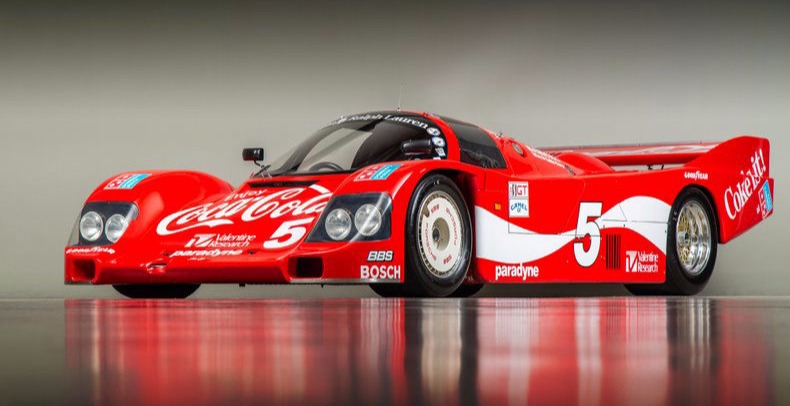
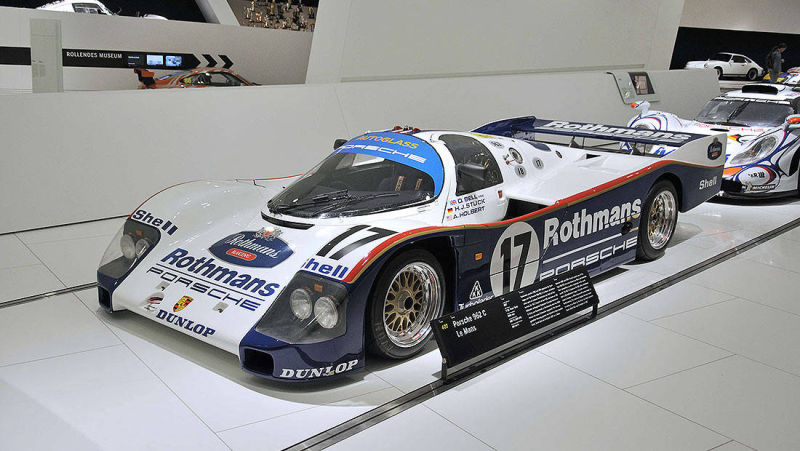
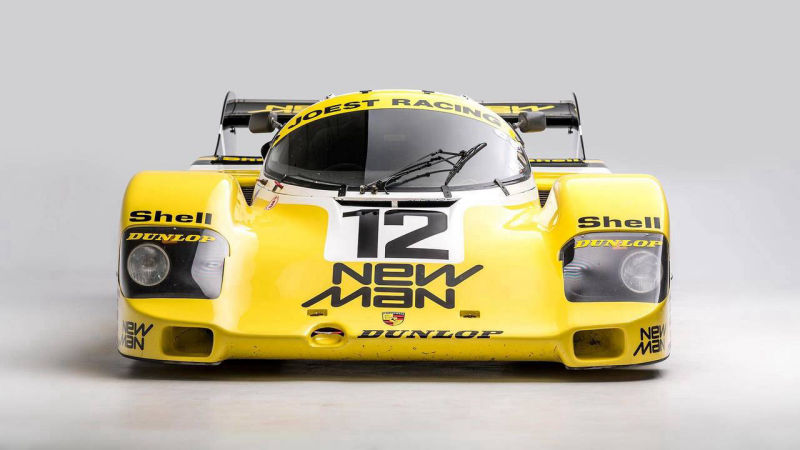
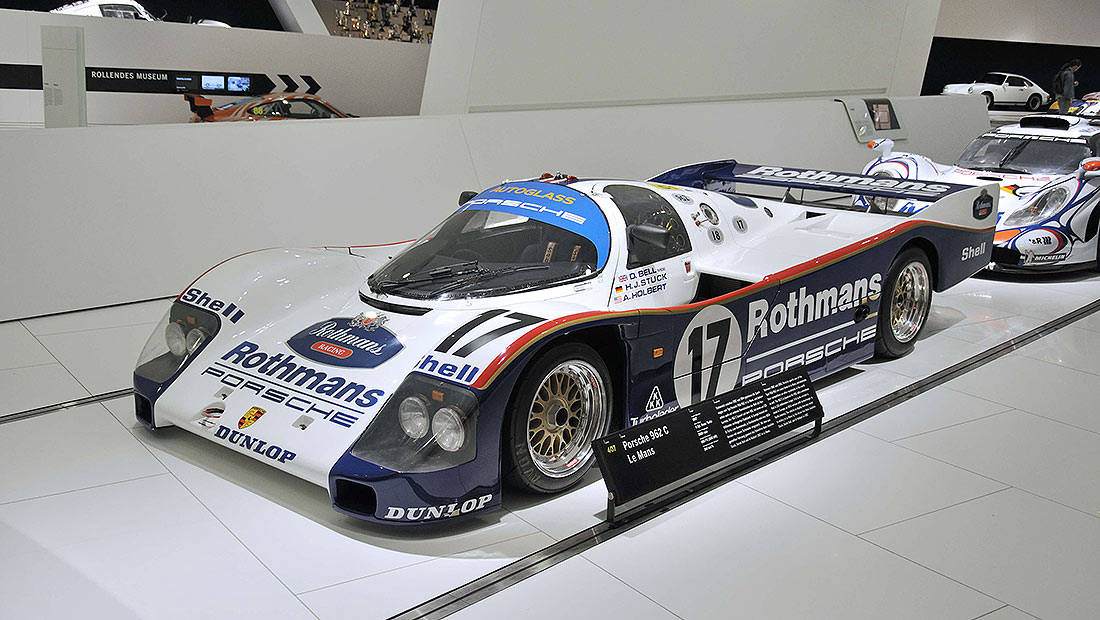
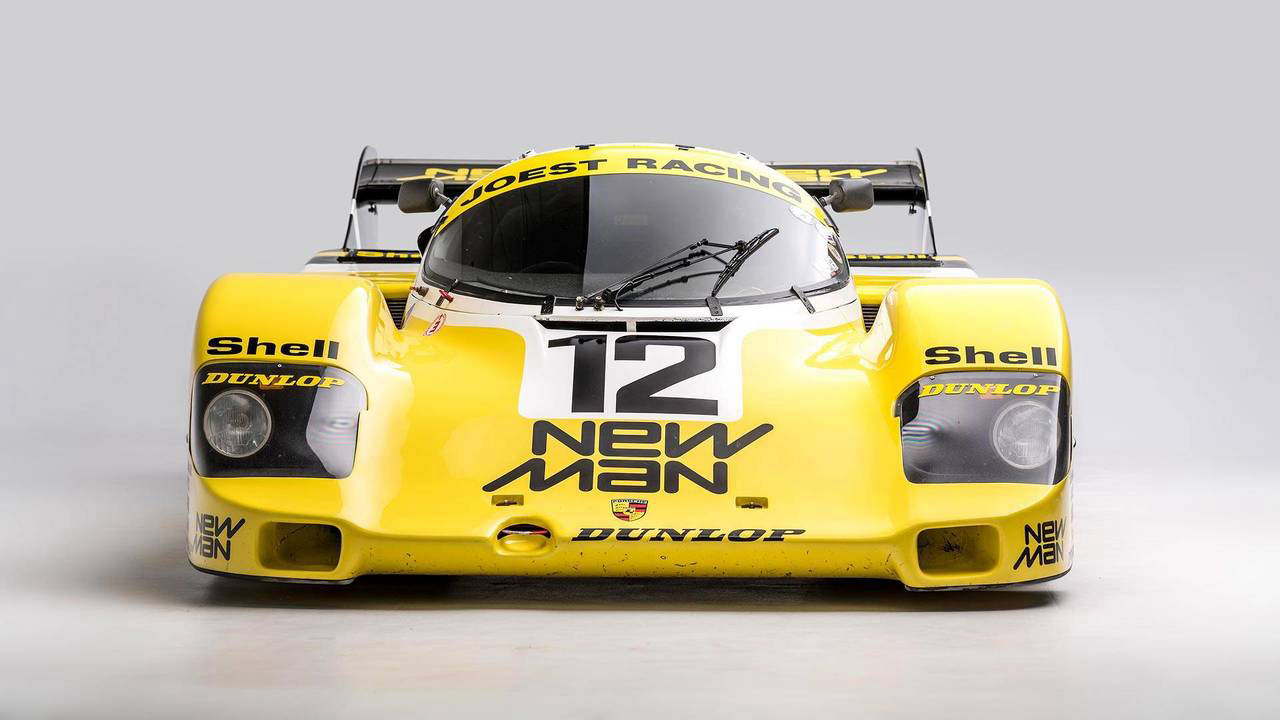
Originally conceived as the IMSA/GTP version of the all conquering Porsche 956, the 962 would grow out to become the mainstay of Porsche's sportscar program. Outwardly similar to the 956 used in the Group C class, the 962 IMSA/GTP featured a slightly longer wheelbase and a single Turbocharged completely air-cooled 2.8 litre boxer engine. With 180+ wins the 962 would outscore the unbeatable 956 it was derived from.
Main reason for the conception of the 962 was the stricter safety regulations of the IMSA series. The rules dictated that the pedal box had to be mounted behind the front axle line, to which the 956 did not comply. The 956 was a lot of things, but safe it sure wasn't, which is underlined by the fatal crash of one the day's biggest talents, Stefan Bellof. To make the 956 eligible for the IMSA's GTP series, the wheelbase was increased to make room for the pedal box. Further modifications included the addition of a steel rollcage.
Five IMSA 962s were constructed for the 1984 season. Work was under way on a larger engine, but in the meantime the 934 derived 2.8 litre engine was used. In its first season the Holbert and Bell driven 962 scored four IMSA victories, a sign of things to come. For 1985 a 3.2 litre was available and the 962's stronghold on the IMSA GTP series was complete. Up until 1993 the 962 was successful in the IMSA GTP series, the 962's roll of honour includes 5 victorious in the gruelling Daytona 24 Hours race.
For the 1985 WEC (World Endurance Championship) the works team fielded a new car, the 962C. It was similar to the IMSA 962, but it featured the twin Turbo charged engine found in the 956. In the hands of talented drivers like Bell, Ickx and Stuck, the 962C dominated that year's championship. At Le Mans the 962Cs showed blistering pace in qualifying, but in the race they were outrun by the Joest entered 956, which scored the 956's fourth consecutive victory.
The 1986 season was a carbon copy of the 1985 one, with the Porsche field now mostly made up of 962s. The name of the championship changed to WSPC (World Sports Prototype Championship), but the winner was the same! This time the works team was more successful at the 24 Hours of Le Mans. Although two of the three entered cars retired, the works was able to score victory with the remaining 962C.
The FIA followed in the IMSA's footsteps by adding the pedal box behind front-axle rule to the regulations, leaving the 956 obsolete for the 1987 season. The now five year old design was showing its age against more modern competitors like the Jaguars and Saubers and in most of the World Championship races the 962C was outpaced. At Le Mans Porsche introduced a new 3 litre powerplant, which was more powerful but reliability was not sacrificed. It was this reliability that resulted in Porsche's sixth consecutive Le Mans victory after most of the competition were forced to retire.
In 1988 the Jaguar team had truely taken over from Porsche, with the Sauber Mercedes team close on their tale. The six Le Mans victories and the many other major victories of the 956/962 were a fitting finale to Porsche's 20 years stronghold of sportscar racing. The 962 was victorious once more at Le Mans in 1994, with Porsche taking advantage of the large number of 962's produced, making it eligible for the new GT1 class.
Major wins
1985 Mugello 1000 km (Jacky Ickx / Jochen Mass in 962-002)
1985 Monza 1000 km (Manfred Winkelhock / Marc Surer in 962-110)
1985 Silverstone 1000 km (Jacky Ickx / Jochen Mass in 962-002)
1985 Hockenheim 1000 km (Derek Bell / Hans-Joachim Stuck in 962-003)
1985 Mosport 1000 km (Derek Bell / Hans-Joachim Stuck in 962-003)
1985 Brands Hatch 1000 km (Derek Bell / Hans-Joachim Stuck in 962-003)
1985 Selangor 800 km (Jacky Ickx / Jochen Mass in 962-002)
1986 Monza 360 km (Derek Bell / Hans-Joachim Stuck in 962-003)
1986 24 Hours of Le Mans (Derek Bell / Al Holbert / Hans-Joachim Stuck in 962-003)
1986 Jerez 360 km (Oscar Larrauri / Jesus Pareja in 962-115)
1986 Spa 1000 km (Frank Jelinski / Thierry Boutsen in 962-117)
1987 24 Hours of Le Mans (Derek Bell / Al Holbert / Hans-Joachim Stuck in 962-006)
1989 480 km Dijon (Bob Wollek / Frank Jelinski in 962-011)
1990 World Challenge of Tampa (James Weaver in 962-148)
1991 Daytona 24 Hours (Frank Jelinski / Henri Pescarolo / Hurley Haywood / Bob Wollek in 962-129)
1993 Road America Grand Prix (John 'Winter' / Manuel Reuter in 962-016)